How to Reduce Your Daily Exposure to Harmful Chemicals

Most people who want to become healthier start in the same place. They improve their diet, exercise more, try to sleep better and perhaps begin taking a few supplements.
These things matter enormously. But there is another part of our health that we rarely think about: the environment we create around ourselves every single day.

Think about your morning routine.
You wake up, take a shower, wash your hair, apply deodorant, perhaps use a moisturizer or face cream, spray some perfume and put on freshly washed clothes. Later, you clean the kitchen, wash the floor or use an air freshener in your home. None of these things seem particularly important on their own. But many of them are things we repeat every day, sometimes for decades.
That's why I believe becoming healthier isn't only about asking, "What am I eating?"
We should occasionally ask another question: "What am I exposing myself to every day?"
YOUR ENVIRONMENT IS PART OF YOUR HEALTH
Throughout our lives, we're exposed to thousands of different substances through our food, water, air, household products and personal-care products. This doesn't mean that everything synthetic is dangerous. It also doesn't mean we should become frightened every time we see an ingredient we don't recognise. The reality is much more nuanced.
Whether a substance poses a health risk depends on many factors, including what the substance is, the dose, how frequently we're exposed to it and how that exposure occurs.
Our bodies are also remarkably well equipped to deal with many of the substances we encounter. The liver, kidneys, digestive system and lungs all play important roles in processing and eliminating compounds from the body. But that doesn't mean our environment should be ignored.
Our philosophy is quite simple: if an exposure isn't necessary and there is a good alternative available, why not reduce it?
Not because we need to be afraid of chemicals, but because reducing unnecessary exposure is another piece of the health puzzle.
START WITH WHAT YOU PUT ON YOUR BODY
One of the easiest places to start is your bathroom.
We find it interesting how much attention we give to the ingredients in our food while rarely looking at the ingredients in the products we use on our bodies. Turn your shampoo bottle around. Look at your deodorant, moisturiser, perfume or body lotion. Do you know what's actually inside them?
Your skin is not simply a sponge that allows everything to enter your bloodstream. It is an incredibly sophisticated protective barrier. However, certain substances can penetrate the skin to varying degrees depending on the compound, concentration and formulation. For us, that is enough reason to become more conscious about products that we use repeatedly.
If we are going to put something on our body every morning for the next ten or twenty years, we'd rather understand what we're using. That doesn't mean we need to panic about every unfamiliar ingredient. It simply means that we want to make an informed decision.
WHY WE CHANGED SOME OF THE PRODUCTS IN OUR HOME
This is something we've gradually changed in our own lifestyle. We didn't wake up one morning, throw everything in the bin and replace our entire bathroom. We started paying attention.
One of the things we reduced considerably was conventional perfume and heavily fragranced products. Fragrance isn't automatically dangerous simply because it's synthetic, but fragrances can contain mixtures of many different ingredients. Because perfume and fragranced products are something we can use repeatedly, we've personally decided to minimise them where possible.
The same happened with our shampoos, creams and other personal-care products. We gradually began looking for simpler alternatives and companies that are transparent about their ingredients and manufacturing.
For us, this isn't about creating a perfectly "toxin-free" home.
It's simply about removing things we don't really need.
NATURAL DOESN'T ALWAYS MEAN HEALTHY
There is also a serious mistake we don't want people to make.
When you start exploring this world, you'll see words such as natural, organic, green, clean and non-toxic everywhere. Don't automatically trust them. Natural doesn't necessarily mean safe, just as synthetic doesn't necessarily mean dangerous.
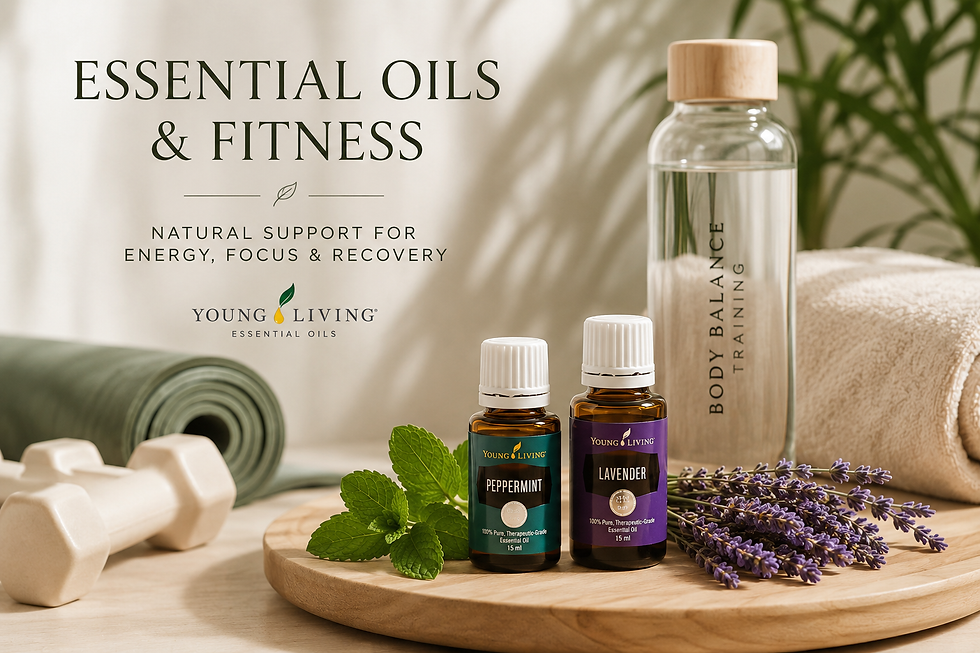
Nature itself contains incredibly powerful compounds. Essential oils are a good example. They're natural, but they're also highly concentrated mixtures of active chemical compounds and should be used appropriately. So instead of simply looking for the word "natural" on a bottle, we prefer to look deeper.
What ingredients are being used? Is the company transparent about where they come from? Are their products appropriately tested? Does the company have a good reputation? Can I actually understand what I'm buying?
This is where becoming an informed consumer is much more valuable than simply becoming a "natural" consumer.
THE GOAL ISN'T TO LIVE CHEMICAL-FREE
This is perhaps the most important point of the entire article.
You cannot live without chemicals. And you shouldn't try.
Water is a chemical substance. The air around us consists of chemical substances. Plants contain thousands of naturally occurring chemical compounds. Essential oils themselves are complex mixtures of chemical compounds.
So when somebody promises you a "chemical-free lifestyle," that isn't scientifically meaningful. What we're really talking about is something much simpler: reducing unnecessary exposure to substances that may be harmful while creating an environment that supports our health.
That's a philosophy we can stand behind.
Eat real food. Move your body. Build and maintain muscle. Sleep properly. Spend time outside. Manage your stress. Use supplements intelligently when they're actually needed. And become conscious of the environment you create around yourself.
You don't need to fear the modern world. You don't need to become obsessed with perfect health. And you certainly don't need to throw everything in your house away tomorrow.
Just start paying attention. Then make one small change.
Because health isn't built through one enormous decision. It's built through hundreds of small decisions repeated over a lifetime.
Move better. Feel better. Live better.
Comments